
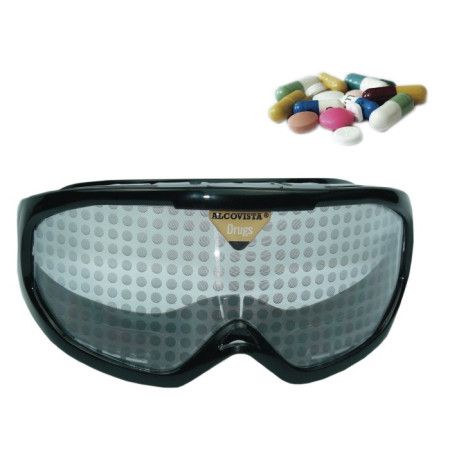

Drugs impairment goggles
Glasses simulating the effects of drugs and psychotropic substances
These glasses simulate many of the effects of using illicit drugs or an overdose of prescription medication.
Main effects of the drug simulation glasses:
- Altered perception of space
- Lack of concentration
- Significant visual disturbances and dizziness
- Impaired motor skills
- Disorientation
Each pair of glasses includes 1 MICROFIBER POUCH and 1 MICROFIBER CLEANING CLOTH
QUANTITY DISCOUNTS ARE AUTOMATICALLY UPDATED IN YOUR CART ACCORDING TO THE GLASSES CHOSEN FROM OUR RANGE
Customer service
Public authorities
5-year guarantee
shipping by UPS
|


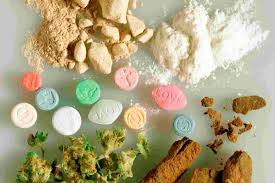
Drugs are substances capable of altering individuals' behaviour, causing a state of physical and psychological dependence, hallucinations, sleep disturbances, a distorted perception of reality and many other effects.
Today, drug use causes many traffic accidents with victims, all of which could be avoided. Remember that there is no risk-free level of use: if you take drugs, don't drive.
Drugs can be classified into different types, each with different effects on driving. All of them are equally dangerous.
Types of drugs and their effects on driving
- Depressants: Slow down neural activity and reduce bodily functions.
- Stimulants: Increase neural activity and bodily functions.
- Hallucinogens: Significantly affect the individual's perception.
Depressant drugs of the nervous system include substances such as cannabis, opiates (heroin, morphine, methadone), GHB (liquid ecstasy) or tranquilizers (anxiolytics, hypnotics). They greatly reduce vision, reaction capacity, concentration and reflexes.
Stimulant drugs include substances such as amphetamines, cocaine or ecstasy. They can produce a false sense of control, reduced fatigue and reduced need for sleep. However, this is a mistaken perception that results in poor coordination, diminished reflexes, and visual and auditory problems.
Finally, regarding hallucinogenic drugs such as mushrooms, LSD and ketamine, among others, these are substances capable of producing changes in the perception of reality or imaginary visions, which depend largely on the mood of the person consuming them.
